



Bcl-2 Family Activator
-
Topoisomerase I inhibitor 17
 0 ImagesCat. No.: HY-168739CAS No.: 2413582-45-1
Topoisomerase I inhibitor 17 (Compound 7h) is a Topoisomerase I (Top1) inhibitor. Topoisomerase I inhibitor 17 reduces DDX5 and reverses the locking of Top1 activity by DDX5. Topoisomerase I inhibitor 17 induces Top1-mediated DNA damage and promotes reactive oxygen species (ROS) production. Topoisomerase I inhibitor 17 induces Apoptosis (reduces antiapoptotic proteins XIAP, Bcl-2, Survivin and up-regulates pro-apoptotic proteins Bax, γH2AX). Topoisomerase I inhibitor 17 also blocks the progression of the G2/M checkpoint and induces cell cycle arrest. Topoisomerase I inhibitor 17 significantly inhibits colony formation and cell migration in colorectal cancer cells. Topoisomerase I inhibitor 17 effectively reduces tumors in human PDX tumor mice.
-
PROTAC EZH2 Degrader-44
 0 ImagesCat. No.: HY-181413CAS No.: 3093642-25-9
PROTAC EZH2 Degrader-44 (compound 60) is a highly efficient PROTAC degrader targeting the EZH2-PRC2 complex. By recruiting the CRBN E3 ligase and relying on the proteasome system, PROTAC EZH2 Degrader-44 simultaneously induces the degradation of core components EZH2, SUZ12 and EED, thereby significantly reducing the levels of H3K27me3 and CARM1. PROTAC EZH2 Degrader-44 exerts antiproliferative effects through a dual mechanism: on the one hand, it triggers mitochondrial dysfunction leading to decreased membrane potential; on the other hand, it strongly promotes apoptosis by regulating Bcl-2 family proteins (upregulating Bax, Caspase-3 and PARP, and downregulating Bcl-2). PROTAC EZH2 Degrader-44 exhibits only extremely low cytotoxicity in human normal mammary epithelial, liver and kidney cells, showing a favorable safety window. PROTAC EZH2 Degrader-44 is an ideal tool molecule for exploring the mechanisms of targeted therapy for triple-negative breast cancer.
-
8-Acetonyldihydronitidine
 0 ImagesCat. No.: HY-N21597CAS No.: 80330-39-8
8‑Acetonyldihydronitidine is a naturally occurring benzophenanthridine alkaloid with antibacterial, antifungal, and anti-proliferative activities against colorectal cancer cells. 8‑Acetonyldihydronitidine inhibits Staphylococcus aureus and exerts a potent antifungal effect against Cladosporium cladosporioides. 8‑Acetonyldihydronitidine activates the p53 signaling pathway, upregulates the expression of target genes including p21, BAX, and FAS, downregulates cyclin A and cyclin B, and induces cell cycle arrest and apoptosis, thereby suppressing the proliferation of colorectal cancer cells. 8‑Acetonyldihydronitidine is used in research related to colorectal cancer, fungal infections, and bacterial infections.
-
MA203
 0 ImagesCat. No.: HY-179157
MA203 is a selective CHK1 PROTAC degrader. MA203 targets activated CHK1 for degradation by recruiting the CRBN E3 ubiquitin ligase, thereby completely abolishing both its catalytic and non-catalytic functions and ultimately triggering DNA replication catastrophe and apoptosis. MA203 can be used in research related to pancreatic ductal adenocarcinoma, colorectal cancer, and acute lymphoblastic leukemia.
-
VEGFR/PD-L1-IN-1
 0 ImagesCat. No.: HY-183369CAS No.: 2675913-94-5
VEGFR/PD-L1-IN-1 is a VEGFR2 and PD-L1 inhibitor, with IC50 values of 0.383 μM and 134.407 pg/mL against VEGFR2 and PD-L1, respectively. VEGFR/PD-L1-IN-1 enhances the secretion of INF-γ, induces G0/G1 cell cycle arrest in cancer cells, and triggers cancer cell apoptosis. VEGFR/PD-L1-IN-1 upregulates the expression of BAX and Caspase-3, and downregulates the expression of Bcl-2. VEGFR/PD-L1-IN-1 can be used in research related to hepatocellular carcinoma, prostate cancer, and colorectal cancer.
-
(E)-Ferulic acid (Standard)
 0 ImagesSynonyms: (E)-Coniferic acid (Standard)
(E)-Ferulic acid (Standard) is the analytical standard of (E)-Ferulic acid. This product is intended for research and analytical applications. (E)-Ferulic acid is an isomer of ferulic acid, an aromatic compound abundant in plant cell walls. (E)-Ferulic acid causes phosphorylation of β-catenin (β-catenin), leading to proteasome degradation, increasing the expression of pro-apoptotic factor Bax and reducing pro-apoptotic factor Expression of the survival factor survivin. (E)-Ferulic acid can effectively remove reactive oxygen species (ROS) and inhibit lipid peroxidation. (E)-Ferulic acid exerts antiproliferative and antimigratory effects in the human lung cancer cell line H1299.
-
CDK1/2/4-IN-1
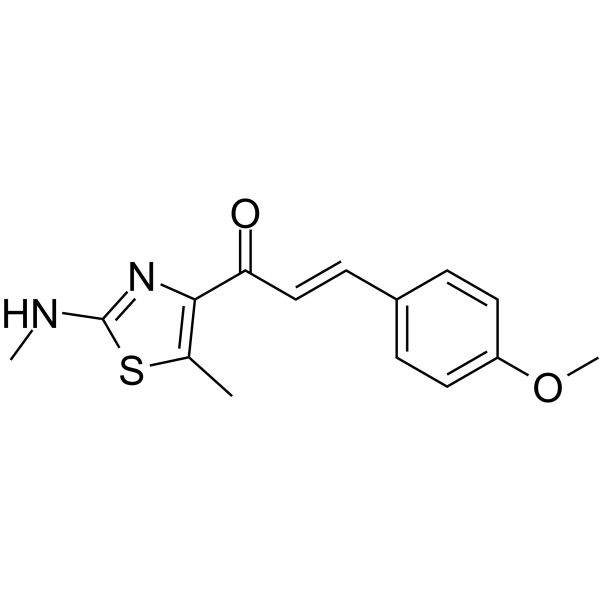 0 ImagesCat. No.: HY-146253CAS No.: 2414633-49-9
CDK1/2/4-IN-1 (compound 3a) is a potent CDK inhibitor with IC50 values of 1.47, 0.78 and 0.87 μM for CDK1, CDK2 and CDK4, respectively. CDK1/2/4-IN-1 arrests cell cycle at G2/M phase and induces apoptosis. CDK1/2/4-IN-1 elevates Bax, caspase-3, P53 levels and decreases Bcl-2 level. CDK1/2/4-IN-1 can be used for cancer research.
-
CHNQD-01522
 0 ImagesCat. No.: HY-181675
CHNQD-01522 is a microtubule inhibitor targeting the colchicine binding site on β-tubulin. CHNQD-01522 binds to the colchicine binding site on β-tubulin, inhibits microtubule polymerization, and evades P-glycoprotein transport in cancer cells. CHNQD-01522 inhibits proliferation, suppresses tumor cell colony formation, arrests cell cycle in G2/M phases, and induces apoptosis in cancer cells. CHNQD-01522 upregulates of Bax and activation of caspase-9 and caspase-3. CHNQD-01522 shows anti-tumor efficacy in subcutaneous and orthotopic hepatocellular carcinoma xenograft tumor models. CHNQD-01522 can be used for the research of hepatocellular carcinoma.
-
Nivalenol (Standard)
 0 ImagesCat. No.: HY-N6801RCAS No.: 23282-20-4
Nivalenol (Standard) is the analytical standard of Nivalenol (HY-N6801). This product is intended for research and analytical applications. Nivalenol, a trichothecene mycotoxin that can be produced by Fusarium graminearum, is a fungal metabolite present in agricultural product. Nivalenol modulates apoptotic pathway, cell cycle regulation, Bax, ERK, caspase-3, and poly-ADP-ribose synthase activity in macrophages. Nivalenol inhibits ribosomal peptidyltransferase site, protein synthesis, DNA synthesis, and cell proliferation. Nivalenol induces late-stage apoptotic morphological changes, reduces cellular metabolism, and decreases cell proliferation in erythroleukemia cells. Nivalenol induces lymphocyte apoptosis in murine thymus, spleen, and Peyer's patches. Nivalenol can be used for the research of erythroleukemia.
-
EGFR/HER2-IN-20
 0 ImagesCat. No.: HY-184301
EGFR/HER2-IN-20 is a dual EGFR/HER2 inhibitor. EGFR/HER2-IN-20 induces G1/S phase cell cycle arrest by downregulating CCND1. EGFR/HER2-IN-20 induces cell apoptosis by upregulating BAX and caspase-3. EGFR/HER2-IN-20 inhibits cancer cell migration. EGFR/HER2-IN-20 can be used in the research of cervical cancer and breast cancer.
-
Bax activator-2
 0 ImagesCat. No.: HY-182349CAS No.: 3034297-25-8
Bax activator-2 is a pro-apoptotic agent targeting BAX, with an IC50 of 0.30 μM against human BAX. Bax activator-2 binds to the trigger site of BAX and induces its conformational change. Bax activator-2 induces mitochondrial depolarization, cytochrome c release, cleavage of caspase-3/9 and PARP, thereby initiating apoptosis. Bax activator-2 exhibits cytotoxicity against a variety of cancer cell lines. Bax activator-2 can be used in research related to acute myeloid leukemia and solid tumors.
-
SP-6-27
 0 ImagesCat. No.: HY-136893CAS No.: 1384170-58-4
SP-6-27 is a tubulin depolymerizing agent that binds to the colchicine site of β-tubulin. SP-6-27 induces G2/M cell cycle arrest in ovarian cancer cells. SP-6-27 enhances intrinsic apoptosis in ovarian cancer cells through upregulation of Bax, Apaf-1, caspase-6, caspase-9, and caspase-3. SP-6-27 reduces ovarian cancer cell migration. SP-6-27 inhibits capillary tube formation by human umbilical vein endothelial cells. SP-6-27 shows minimum cytotoxicity to normal ovarian epithelia. SP-6-27 shows enhanced cytotoxicity in chemo-sensitive/resistant ovarian cancer cells when combined with Cisplatin (HY-17394). SP-6-27 can be used for the research of ovarian cancer.

-
Apoptosis inducer 50
 0 ImagesCat. No.: HY-179052
Apoptosis inducer 50 (Compound 5e) is an apoptosis inducer as well as an autophagy inducer agent. Apoptosis inducer 50 exhibits potent and selective anti-cancer activity against triple-negative breast cancer cells and metastatic colon cancer cells. Apoptosis inducer 50 upregulates the expression of pro-apoptotic proteins (Bax, Bim, cleaved Caspase-9) and downregulates the expression of the anti-apoptotic protein (BCL-XL). Apoptosis inducer 50 upregulates key autophagy markers such as Beclin-1 and ATG5, and enhances the conversion of LC3-I to LC3-II., Apoptosis inducer 50 arrests cancer cells in the G1/S phase by upregulating the expression of p21 and p27 while downregulating Cyclin D1. Apoptosis inducer 50 increases the level of ROS.
-
MB725
 0 ImagesCat. No.: HY-119408CAS No.: 2230058-99-6
-
Neosolaniol
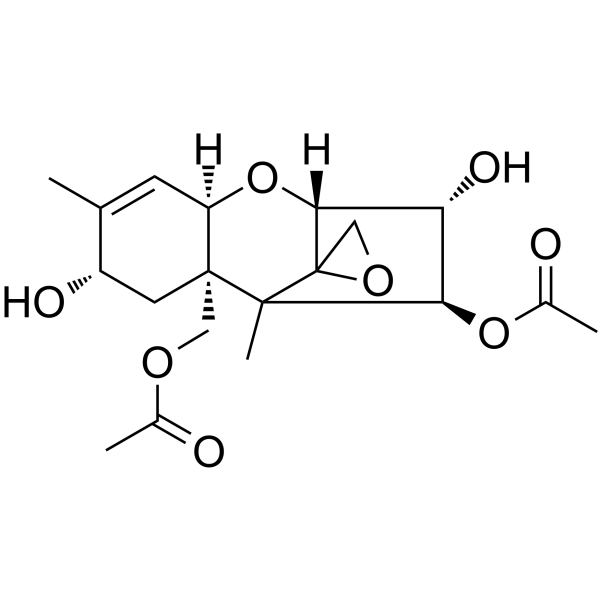 0 Images
Neosolaniol is an orally active type A trichothecene mycotoxin, and it is a metabolite of T-2 Toxin (HY-N6792) in human cancer cells and renal epithelial cells. Neosolaniol targets Bax, Bcl-2, caspase 3, caspase 8, and cytochrome c, thereby inducing apoptosis, emesis and anorexia. Neosolaniol reduces intracellular ATP levels, elevates ROS levels, decreases mitochondrial membrane potential, induces mitochondrial damage, and exerts toxicity on Leydig cells. Neosolaniol downregulates the expression of intestinal tight junction proteins in broilers and increases the load of Salmonella enteritidis in the cecum of broilers. Neosolaniol can be used in research related to anorexia, lymphoma, Fusarium melonis rot, and Salmonella infection.
-
HDAC8-IN-14
 0 ImagesCat. No.: HY-178380
HDAC8-IN-14, a curcuminoid derivative, is a selective HDAC8 inhibitor with a Ki of 9 nM. HDAC8-IN-14 induces the production of reactive oxygen species (ROS), disrupts mitochondrial membrane potential, and promotes apoptosis. HDAC8-IN-14 can significantly promote the accumulation of cells in the sub-G0/G1 phase, consistent with apoptotic or necrotic cell death. HDAC8-IN-14 induces upregulation of cytochrome c, cleaved caspase-3, and the pro-apoptotic protein Bak while leaving the anti-apoptotic Bcl-2 levels unaltered. HDAC8-IN-14 can be used for the study of leukemia.
-
RU28362
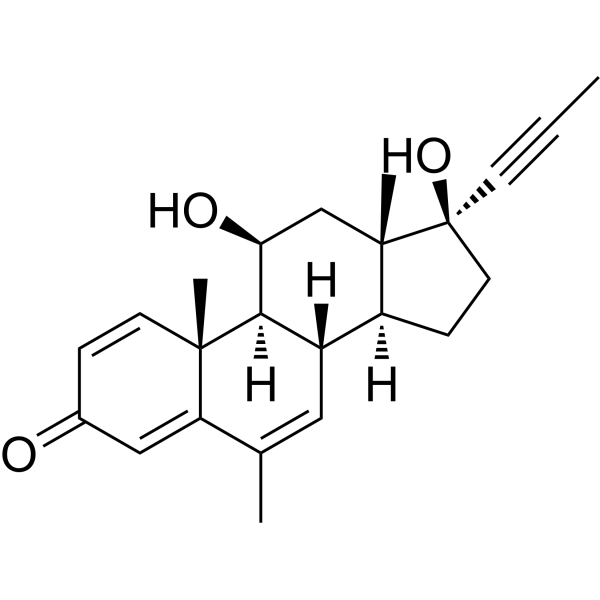 0 ImagesCat. No.: HY-121859CAS No.: 74915-64-3
RU28362 is a potent and selective glucocorticoid agonist. RU28362 increases the Bnip3 mRNA levels in neurons. RU28362 inhibits adrenocorticotrophic hormone (ACTH) and corticosterone secretion. RU28362 is a click chemistry reagent, it contains an Alkyne group and can undergo copper-catalyzed azide-alkyne cycloaddition (CuAAc) with molecules containing Azide groups.
-
NGI-189
 0 Images
NGI‑189 is a selective OST‑A inhibitor. NGI‑189 inhibits the STT3A catalytic subunit of the OST complex and reduces N‑glycosylation of target glycoproteins. NGI‑189 blocks oncogenic and bypass signaling, reduces phosphorylation of EGFR, AKT, p70S6K and S6RP, and induces cell cycle arrest and apoptosis. NGI‑189 markedly suppresses tumor growth and induces tumor regression in non‑small cell lung cancer (NSCLC) xenograft models. NGI‑189 can be used for the research of EGFR‑mutant non‑small cell lung cancer.



